Carrying a power bank on the plane or electronic devices and gadgets has become almost indispensable when flying these days, whether it’s to relieve boredom during a long-haul flight or to stay connected during transit at the airport. In this context, portable chargers and battery packs have become true lifesavers to power our smartphones, tablets and other portable electronics on the go. But before you pack your beloved power bank in your carry-on luggage and head to the airport, make sure you know the applicable regulations and restrictions to avoid any unpleasant surprises at the security checkpoint.
In this blog article, we take a closer look at the rules and regulations around taking power banks on the plane. We’ll clarify questions like, “Are you allowed to take a power bank on the plane?” and “How many battery packs are allowed in carry-on luggage?” In addition, you will learn whether it is allowed to charge your portable power pack during the flight and why it is better not to transport a portable charger in your suitcase. Learn how to travel safely and stress-free with your power bank.
How do I show my power bank at the airport?
It is advisable to mention at the check-in counter that you are carrying a battery pack. Usually, the staff in charge will also ask you if there is a power bank in your checked baggage. At the security checkpoint, remove the portable charger from your carry-on luggage and place it on the conveyor belt without a cover. Also, make sure the capacity is clearly marked on the case of the original packaging. Otherwise, you may not make it through security.
Can you take a power bank on the plane?
Is it allowed to take a portable charger on the plane? In principle, you are allowed to take a power bank with you on the plane, but you have to keep some things in mind. The battery pack must not exceed a maximum capacity of 100 Wh or 27,000 mAh. One person may carry a maximum of two power banks, and the battery packs may not exceed a maximum capacity of 100 Wh each.
Where can I carry a power bank on the plane?
A power bank should always be carried in your hand luggage on the plane. It can be taken in the cabin without any problems and without having to be registered beforehand. However, it is important to follow the instructions of the airlines to avoid possible problems.
Where to put the power bank on the plane: suitcase or hand luggage?
For safety reasons, power banks should only be carried in your hand luggage when flying. The lithium-ion battery of a portable charger can start a fire in the event of a short circuit. Although such cases are sporadic, a fire is more likely to be discovered in the cabin than in the cargo hold. Ensure your safety and bring your battery pack on board in your hand luggage.
How many power banks can I take in my hand luggage?
How many portable battery packs are allowed in carry-on luggage? According to the International Air Transport Association (IATA), travelers should follow these guidelines when flying:
Two power banks per person are allowed in carry-on luggage
These cannot exceed the maximum limit of 100 Wh (watt-hours) per person.
Dangerous to use: Lufthansa bans power banks on board
Lufthansa tightens power bank rules – Since 15 January 2026, Lufthansa and all airlines in the Lufthansa Group (including Swiss, Austrian, Brussels Airlines, Eurowings, Discover, Edelweiss and Air Dolomiti) have applied significantly stricter rules for power banks on board. Power banks up to 100 Wh are still permitted, but they may only be carried in hand luggage and may not be transported in checked baggage or stowed in the overhead compartment above the seats. A maximum of two power banks per person are permitted; larger batteries between 100 and 160 Wh require prior approval from the airline, and anything above that is completely prohibited.
The main change is the ban on use: On Lufthansa flights, power banks may not be used to charge smartphones, tablets or laptops, nor may they be charged via the aircraft’s power supply – the only exception is approved medical devices. During the flight, power banks must be carried on your person or stowed in your hand luggage under the seat in front of you or in the seat pocket; storage in the overhead bin is expressly prohibited. Lufthansa refers to updated safety recommendations from EASA, IATA and other authorities, as well as to several fire incidents caused by overheated lithium-ion batteries, which is why passengers should charge their devices before boarding or use the built-in USB ports in their seats.
Can I charge my power bank on the plane?
In most cases, it is safe to charge your portable charger on the plane as long as you follow the applicable rules and restrictions. Most airlines allow in-flight charging of electronic devices such as smartphones, tablets, and power banks. You can use your battery pack to charge electronic devices on the plane, but you must turn it off during takeoff and landing. It is also important to monitor the temperature of the power bank and prevent it from overheating.
Can I charge my power bank during the flight?
Yes, you can charge your portable charger on board the aircraft as long as you do not do so during takeoff or landing. However, it is important to monitor the temperature of the power bank and ensure that it is not exposed to excessive heat.
Current rules regarding portable chargers on airplanes
As mentioned already, the majority of airlines will allow you to take a suitable power bank in your hand luggage. However, not all airlines allow the active use of charging electronic devices during the flight with these portable power banks. The following will provide you with an easy overview of various airlines’ rules:
Airlines that permit the use of portable chargers on board
The following airline carriers generally allow passengers to bring and use (i.e., charge devices with) power banks—often with visibility or placement requirements:
British Airways
Ryanair
Easyjet
Jet2
Air France
Southwest Airlines (U.S.)
American Airlines
Delta Airlines
United Airlines
Japan Airlines
Airlines that allow carriage only
These airlines permit you to bring power banks onboard but prohibit their use during the flight:
Brussels Airlines
Lufthansa
Emirates
Qantas
Malaysia Airlines
Singapore Airlines
EVA Air
China Airlines (Taiwan)
Thai Airways
Cathay Pacific
AirBusan / South Korean Carriers
AirAsia
Korean Air
Asiana
Tigerair Taiwan
Starlux
Airline / Region | Carry-On Allowed? | In-Flight Use Allowed? |
|---|---|---|
Southwest (USA) | Yes (visible use required) | Yes, if visible (no hidden in bags). |
Most US & European carriers (A, D, U, etc.) | Yes (under IATA limits) | Generally allowed; Lufthansa bans charging. |
Japan Airlines | Yes | Allowed, with visibility rules. |
Singapore Airlines / Scoot | Yes | Prohibited from April 1, 2025. |
EVA Air, China Airlines (Taiwan) | Yes | Prohibited in-flight. |
Thai Airways | Yes | Prohibited in-flight. |
Cathay Pacific & HK Airlines | Yes | Prohibited, plus no overhead bin. |
South Korean carriers (AirBusan, etc.) | Yes (on person) | Prohibited and no overhead storage. |
AirAsia, Korean Air, Asiana, etc. | Yes | Prohibited in-flight. |
Emirates | Yes (one <100 Wh) | Prohibited from October 1, 2025. |
Qantas | Yes | Not recommended, effectively discouraging use. |
Brussels Airlines, Lufthansa | Yes | Prohibit charging/use. |
Malaysia Airlines | Yes | Prohibit use and overhead storage. |
Why can’t you take a power bank on the plane?
It is permitted to carry a portable charger on an airplane, but only in your carry-on baggage. Power banks may not be transported in checked baggage (baggage compartment), as this could jeopardize security. In the passenger area, baggage is permanently monitored, while in the regular baggage compartment, no permanent observation is guaranteed. In the event of a short circuit and resulting fire, this could jeopardize the safety of the entire flight.
The situation is fundamentally different for the battery pack in the hand luggage: Many air travelers carry their handbag with them or look around curiously during the flight. In addition, the flight attendants and service staff are always attentive and look after the well-being of the passengers. If a fire were to occur, it would be noticed immediately. The extinguishing measures available on board would be sufficient to combat and eliminate the danger at an early stage.
These explanations are based on the recommendations of the International Air Transport Association (IATA), an overarching association for most airlines. IATA has established recommendations for the transportation of various battery types in the Lithium Battery Shipping Regulations (LBSR). Although these recommendations are not hard and fast rules, most airlines follow the IATA rules or even implement stricter guidelines for their own airline.
Why are power banks not allowed to be transported in suitcases?
Can I check my portable charger in my suitcase as normal baggage? For safety reasons, power banks should only be transported in carry-on luggage. The reason for this is the risk of fire, which can be caused by a short circuit of the lithium-ion battery. It is important to observe this safety measure in order to minimize possible risks.
Why should portable chargers only be carried in carry-on luggage? Here are some reasons why there are restrictions on power banks on airplanes:
Fire Hazard: Power banks contain lithium-ion batteries that can catch fire if used improperly or damaged. In an aircraft, a battery fire can have serious consequences as it can be difficult to extinguish and can spread quickly.
Short Circuit Risk: Contacts on portable chargers could be accidentally shorted during flight, resulting in overheating or fire.
Overheating: If power banks are overheated, this can also lead to a fire hazard. In narrow airplane cabins, heat generation could be problematic.
Precautions: Airlines and airports implement safety regulations to minimize these risks. This may include packing battery packs in carry-on luggage and avoiding damage or excessive heat.
It is important to note that the exact rules and restrictions may vary depending on the airline and country. Therefore, before taking a portable charger on board, you should check the specific policies of your airline and destination country beforehand to avoid any potential inconveniences or delays.
Affected by a flight delay or cancellation?
If your flight departed from or landed in the UK, your claim is valid for 6 years. Even if your flight took place more than 6 years ago, you may still be entitled to a claim. The 6-year period begins from the end of the year in which the incident occurred, e.g. if you had a cancelled flight on 01.01.2023, you can still claim compensation until the end of 2029. If you had a case of a cancelled or significantly delayed flight during the last 6 years, check your eligibility for compensation before the time runs out!
According to the UK261 Regulation, the amount of compensation is calculated according to the flight distance:
Short distance up to 1500 km | Medium distance up to 3500 km | Long distance from 3500 km |
|---|---|---|
e.g. London – Edinburgh | e.g. London – Athens | e.g. London – Tokyo |
£220 | £350 | £520 |
What happens when the power bank is in the case?
What happens if you have a power bank in the suitcase? In all likelihood, the portable charger will be removed from the suitcase and returned to your home. This may result in a lengthy baggage inspection where the entire suitcase is checked. This could result in your suitcase not being shipped on your plane, but instead being redelivered on your next flight. For this reason, it is important that power banks are only transported in your hand luggage.
How much mAh is a power bank allowed to have on the plane?
The maximum capacity of a power bank on an airplane is usually about 27000 mAh at a cell voltage of 3.7 volts. Note, however, that the allowed capacity is often specified by the airlines in watt-hours (max. 100 Wh). To convert the mAh specification on the case of your portable charger into watt-hours, please use the following formula: mAh x V ÷ 1000 = Wh.
Power bank plane: Choosing the right power bank
Power banks with a capacity of less than 100Wh are usually accepted on board.
It is important to consider portable chargers with safety features such as overcharge protection, short circuit protection, and temperature management.
Avoid battery packs with damaged or frayed cables and those that have been dropped or otherwise damaged.
Are power banks checked at the airport?
Yes, power banks are usually checked at the airport. Most airports around the world have security checks to ensure that all luggage and electronic devices comply with current security regulations. Portable chargers are electronic devices and will be checked at security to ensure they do not pose a threat.
It is advisable to check the specific regulations and policies of each airline and the particular airport you will be using before you travel, as the exact regulations may vary by airline and airport.
Our tips:
“Remove your power bank, just like other electronics, from your carry-on bag before placing it on the belt at security. This will reduce the likelihood that you will have to fully unpack your carry-on.”
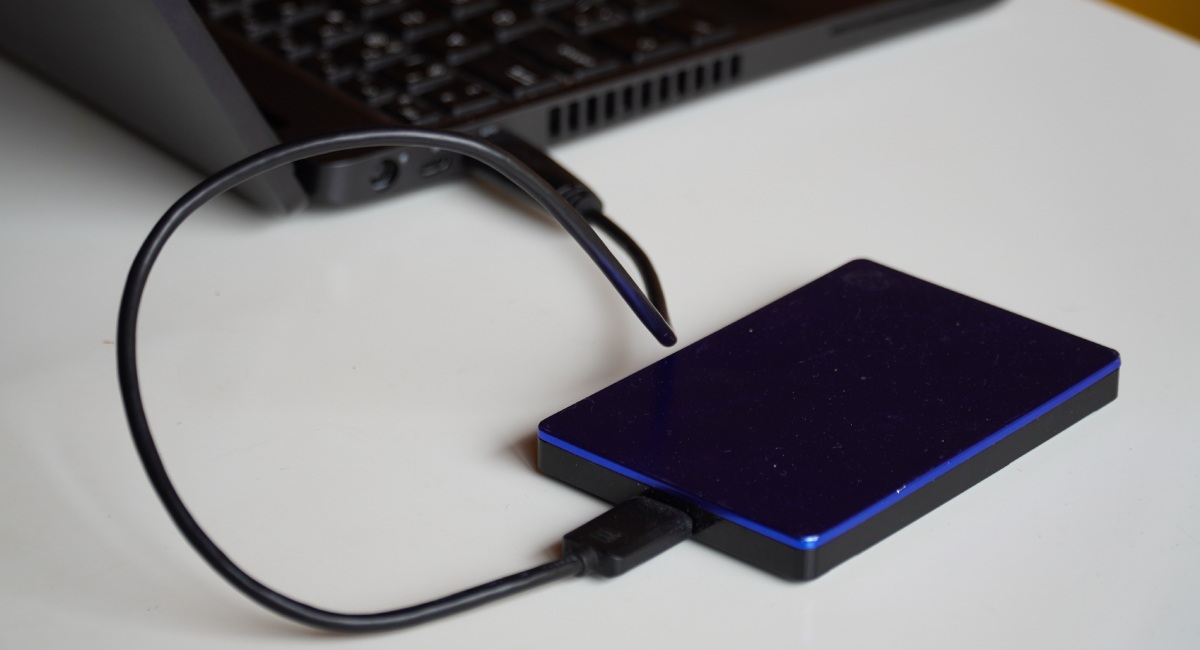
Conclusion: Take power banks on the plane belong in your hand luggage!
If you are traveling by air, it is safest to carry the portable chargers in your carry-on luggage. As a rule, the total power of all power banks carried should not exceed 100 watt-hours (Wh) or 27,000 mAh. If you have two power banks for your smartphone or tablet, you should have no problem meeting this limit. However, if you are using a power bank for your laptop, carefully check the maximum power, as portable chargers for laptops are generally the most powerful. Additionally, you should make sure that the power bank is charged and in proper condition before flying. However, as mentioned above, be sure to follow the airline instructions so that there are no problems in case of doubt.
How can Flightright help you?
Are you stuck at the airport due to a flight delay? Your flight has been cancelled or you have been removed from the passenger list (denied boarding)?
In each of the situations described, you as a passenger have a right to compensation.
According to the UK261 Legislation, passengers are entitled to compensation in the event of a delay, cancellation, overbooking, or missed connection. They can receive up to £520 compensation per person (minus the success commission). This compensation is independent of the ticket price. Flightright enforces your right for you. If necessary also in court.
Tip: Flightright helps you to enforce your passenger rights! With us, you can check your claims free of charge in two minutes. ✔️Easy, ✔️fast ✔️& without risk
As the market-leading consumer portal, Flightright fights for the enforcement of air passenger rights. We stand up for your rights in the event of a flight delay, cancellation or denied boarding and refer to the UK261 Regulation. Flightright’s air passenger rights experts are also happy to help you with ticket refunds and refunds for cancelled package holidays.
As experts in the field of air passenger rights, we enforce your right to compensation against the airline!